Would you like to be informed about what EFSA decides and does? Now you can. All you need to do is to subscribe to one or more of their e-mail newsletters.
EFSA Newsletters
Aug 4
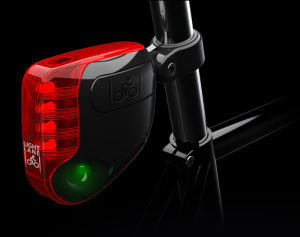 Bike lanes are an effective means of improving safety for cyclists. If there is no bike lane, why not bring your on?
Designers Alex Tee and Evan Gant from Massachusetts are hoping their LightLane bicycle add-on will make bicycling safer at night. One key is that the lane establishes a well-defined boundary beyond the envelope of the bicycle, providing a greater margin of safety between the car and the cycist.
This system projects a crisply defined virtual bike lane onto pavement, using a laser, providing the driver with a familiar boundary to avoid.
However, due to the high cost of installation, bike lanes are not widely available. Instead of forcing cyclists to adapt their behavior to the existing infrastructure, the bike lane should adapt to the cyclist.
Watch this video (no audio):
Thanks to Stine Lorentzen for the tip.
Men and women who walk or ride a bike to work appear more fit, and men are less likely to be overweight or obese and have healthier triglyceride levels, blood pressure and insulin levels, according to this new and imporant report.
Here you can find a useful Guide for Local and State Leaders Working to Create Healthy Communities and Prevent Childhood Obesity. Today, many US communities are unhealthy. Too frequently, families lack access to full-service grocery stores that stock affordable healthy foods, and children don’t have safe places to play or even walk. The toolkit is published by a national program of the Robert Wood Johnson Foundation.
Policy Action Can Help
Fortunately, many of the action strategies outlined in this toolkit are inexpensive and even provide a return on the investment in the long run. With nearly one-third of American youth either obese or overweight, the stakes are too high to do nothing about the direction of our children’s health.
Download the toolkit (102 pages) here. And visit leadershipforhealthycommunities.org for links to many relevant web resources.
Fooducate listed 8 good reasons to stop buying softdrinks: Obesity, Tooth decay, Money, Taste, Refined Sugars, Artificial sweeteners, Artificial Colors and Ecology. What is your reason?
Researchers from Australia and The Netherlands constructed a mathematical simulation model to estimate the potential effects of reducing the exposure of 6- to 12-year-old US children to TV advertising for food on the prevalence of overweight and obesity. Model input was based on body measurements from NHANES 2003–04, the CDC-2000 cut-offs for weight categories, and literature that relates advertising to consumption levels and consumption to body mass. Based on literature findings, the model predicts that reducing the exposure to zero would decrease the average BMI by 0.38 kg/m2 and lower the prevalence of obesity from 17.8 to 15.2% for boys and from 15.9% to 13.5% for girls. When estimates are based on expert opinion, these values are 11.0% and 9.9%, respectively.
Bogus Serving Sizes
Aug 2
Fooducate.com shows examples of how manufacturers trick consumers into believing their product is manna from heaven. A great example is the tiny serving sizes for foods of problematic nutritional value. By decreasing the portion size to 3 year old consumption standards, the calorie count in junk food seems decent.
There is no evidence that organically produced foods are nutritionally superior to conventionally produced foodstuffs, according to a study published on Wednesday, 29 July 2009 in The American Journal of Clinical Nutrition.
Abstract. See also Medical news today.
The American Dietetic Association has released an updated position paper on vegetarian diets that concludes such diets, if well-planned, are healthful and nutritious for adults, infants, children and adolescents and can help prevent and treat chronic diseases including heart disease, cancer, obesity and diabetes.
In a study of more than 61,000 people, Cancer Research UK scientists from Oxford followed meat eaters and vegetarians for over 12 years. Vegetarians are 12 per cent less likely to develop cancer than meat eaters, according to this new research published in the British Journal of Cancer .